Tanzania Rice: Market, Production & Sourcing Guide
Overview
Rice is Tanzania’s second most important food crop after maize, and one of the country’s most significant staples by direct human consumption. Unlike several other commodities in this network, rice is grown, traded and eaten overwhelmingly for the domestic market rather than as an export cash crop — Dar es Salaam alone accounts for more than 60% of national rice consumption, and demand has grown steadily alongside urbanization, from about 20.5 kg per person per year in 2001 to 25.4 kg per person per year in 2011, with continued growth since as Tanzania’s urban population share has risen. Milled national production is estimated at roughly 2.4–2.5 million tonnes a year in recent seasons, alongside meaningful rice imports and much smaller export volumes concentrated in neighboring East African Community markets.
Production & Growing Regions
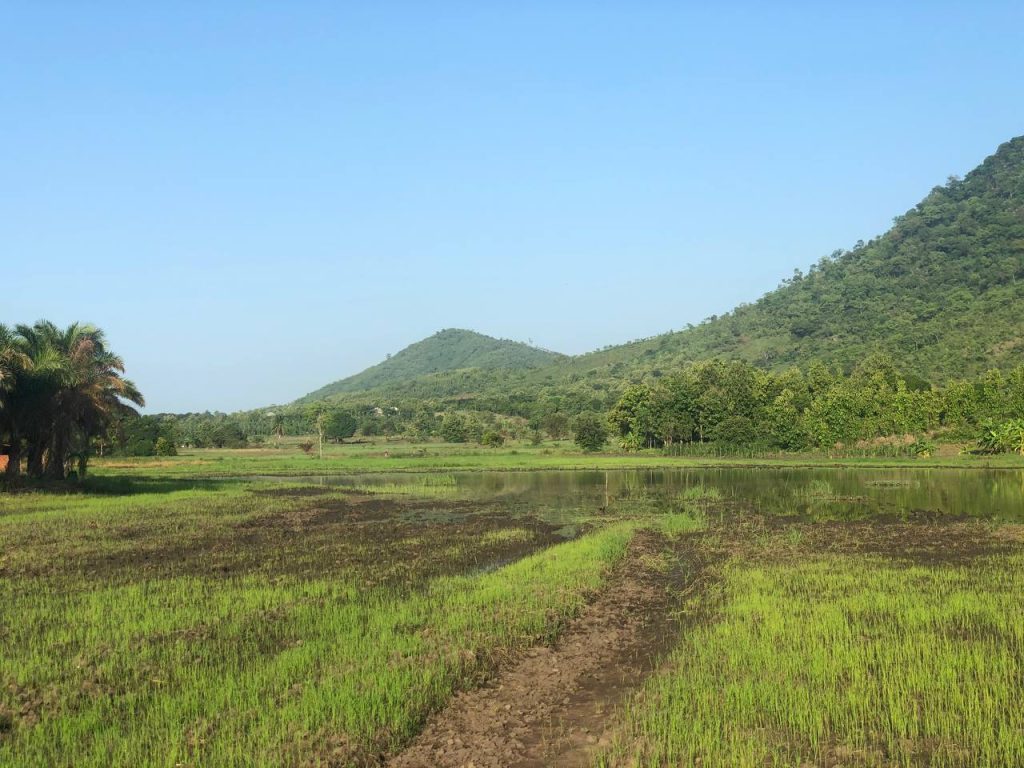
The principal rice-producing regions, per Ministry of Agriculture data, are Morogoro, Shinyanga, Mbeya, Mwanza, Geita and Tabora, which together account for roughly half of national production. The Kilombero Valley in Morogoro Region is Tanzania’s most important lowland rice floodplain, and the Usangu Plains in Mbeya Region’s Mbarali District are another major irrigated production zone. Consumer perception ranks Mbeya-area rice (particularly Kyela District) as the most aromatic and highest quality, Morogoro rice as good, and Shinyanga rice as generally lower quality.
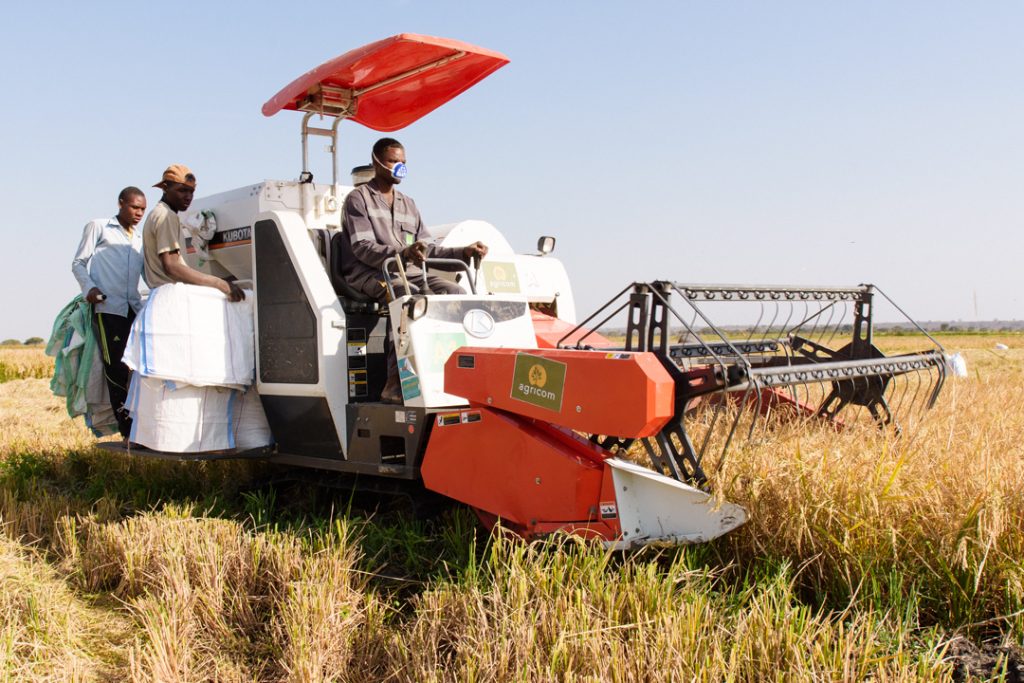
National production grew strongly over 2000–2024, at a compound annual rate of roughly 7.9%, but this growth has been driven overwhelmingly by expanding the area under cultivation rather than by rising yields — area expansion contributed roughly 4.8 percentage points of that growth against only about 2.9 points from yield improvement. Average yields remain low by regional and global standards: approximately 2.2 tonnes per hectare over 2019–2023, compared with 5.8 t/ha in Kenya, 4.2 t/ha in India, 6.6 t/ha in Brazil and 9.0 t/ha in Egypt over the same period. Government strategy (the National Rice Development Strategy Phase II, 2019–2030) targets raising yields to 4 tonnes per hectare and cultivated area to 2.2 million hectares by 2030.
Roughly 90% of national rice cultivation still occurs under rainfed lowland conditions, though irrigated area has expanded substantially in recent years — from approximately 289,000 hectares in 2019/20 to around 600,000 hectares by 2022/23, reflecting significant public investment. An estimated 16–20% of Tanzanian farming households grow rice, the large majority as smallholders; large-scale commercial production accounts for only a small share (historically estimated around 6%) of total planted area.
Varieties & Quality
Tanzanian consumers generally prefer aromatic long-grain rice, with non-aromatic and imported rice typically trading at a discount. “Kilombero rice” and “Kyela rice” are recognized geographic-quality terms tied to specific growing districts rather than informal marketing labels — an active farmer association, the Association of Kilombero High Quality Rice Growers (AKIRIGO), has worked to protect the Kilombero identity, and Kyela rice has been the subject of academic study regarding formal geographical-indication protection. Locally-named traditional varieties include Supa, Behenge and Kula na Bwana, alongside improved cultivars such as TXD 306 (commonly called “Saro 5”) and IRRI-bred introductions including Komboka and Tai.
Formal milled-rice quality in the region is governed by East African Standard EAS 128:2011, which sets three numbered grades: Grade 1 (maximum 5% broken kernels, 2% chalky kernels), Grade 2 (7% broken, 4% chalky) and Grade 3 (15% broken, 10% chalky), with a 13% maximum moisture content and zero tolerance for live weevils across all grades. In practice, the large majority of domestic trade is governed instead by informal market grading, where traders describe rice primarily by the proportion of broken grains — demand is often concentrated around 20% broken rather than the stricter formal grades — and by geographic origin as a quality proxy. Buyers should treat everyday trader terms like “Grade One” as distinct from, and not a reliable proxy for, the formal EAS numbered grades.
Milling, Wholesale Market & Storage
The value chain runs from producer through trader or agent to miller, wholesaler, retailer and consumer, with considerable overlap between these roles in practice. Small mills of roughly 5–20 tonnes/day capacity — mostly Chinese-origin machinery — dominate milling by number of operations and tend to produce a higher proportion of broken grain; larger mills of up to around 120 tonnes/day capacity are capable of producing lower-breakage “Grade One” rice. Milling extraction from paddy to milled rice runs at roughly 65% by weight.
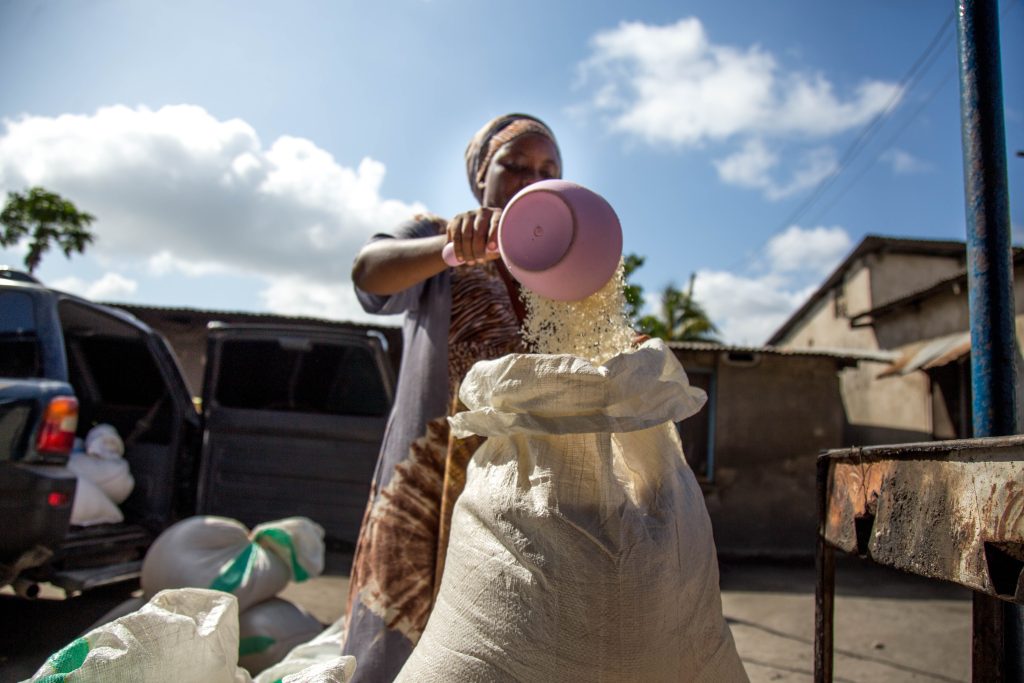
Dar es Salaam’s wholesale rice trade is concentrated through an estimated 15 major wholesalers and brokers operating across three main markets: Tandika (the largest), Tandale and Buguruni. A formal Warehouse Receipts System exists, overseen by a Warehouse Licensing Board, but remains the exception rather than the rule for most rice storage. Road transport dominates logistics, since rail options are generally unreliable for commercial rice movement; retail sale is overwhelmingly through traditional shops and markets rather than supermarkets, which account for only an estimated 10–15% of Dar es Salaam retail volume.
Trade: Imports, Exports & Tariff Policy
Tanzania is, on balance, a net rice importer, with a much smaller volume of exports concentrated in the East African Community. USDA’s official balance for marketing year 2024/25 (forecast) puts imports at approximately 415,000 tonnes against exports of only about 10,000 tonnes — a similar roughly 40:1 ratio held in MY2023/24. Tanzania’s rice imports come predominantly from outside the EAC, led by Pakistan, India and Thailand. Exports, by contrast, go overwhelmingly to EAC and neighboring markets — principally Uganda, Kenya, Rwanda, Burundi and the Democratic Republic of Congo — and Tanzania is estimated to hold around 99% of intra-EAC rice trade share, with EAC-directed export volumes of roughly 299,000 tonnes in 2023 (down from about 435,000 tonnes in 2022).
Separate UN Comtrade/WITS trade statistics for calendar 2023 report Tanzania rice exports of approximately US$126 million (154,362 tonnes) and imports of approximately US$79 million (137,364 tonnes) — this import figure is notably lower than USDA’s official balance for the closest comparable period, a genuine, unresolved divergence between international trade databases and official USDA/Trade Data Monitor figures that buyers relying on trade statistics should be aware of rather than treat either source as automatically definitive.
Non-EAC rice imports face a 75% ad valorem tariff (or US$345 per tonne, whichever is higher) under the EAC Common External Tariff, a protective policy in place since 2005 that significantly reduced import dependence from around 16.5% of consumption (2001–2004) to roughly 5% of consumption in the years immediately following. Import licensing operates through an as-needed permit system rather than a fixed annual quota. All rice imports additionally require a Certificate of Conformity from the Tanzania Bureau of Standards before customs clearance.
Institutions & Regulation
The Ministry of Agriculture is the lead government body for the sector, administering the National Rice Development Strategy and serving as the primary source of official production statistics. The Cereals and Other Produce Board of Tanzania (CPB), established under the Cereals and Other Produce Act No. 19 of 2009, combines commercial functions — buying, processing, marketing and storing cereals including rice — with facilitative and regulatory functions such as registering growers and dealers and licensing buyers, sellers, processors, exporters, importers and warehouse operators. The Tanzania Bureau of Standards sets and enforces the milled-rice quality standard and issues import Certificates of Conformity. The National Food Reserve Agency holds strategic grain stocks, though its documented role is primarily maize-focused rather than rice-specific. At the regional level, the East African Community sets the Common External Tariff applied to non-EAC rice imports. Tanzania’s rice sector strategy is coordinated through an annual, multi-stakeholder Rice Sector Review convened by the Ministry of Agriculture together with development partners including AfricaRice, the World Bank, FAO, IFAD, JICA and the African Development Bank.
Sourcing Rice from Tanzania
Because rice is fundamentally a domestic staple crop with import dependency rather than a major Tanzanian export commodity, buyers approaching this market should expect a different commercial profile than for network commodities like cashew, coffee or vanilla: most volume moves through domestic wholesale channels serving Tanzania’s own urban consumption, with a smaller, EAC-focused cross-border trade in most years. Companies active in production, milling and trade range from large contracted-outgrower estates to smaller regional aggregators and processors — buyers should independently verify current operational status and export capability directly with any prospective supplier, since ownership, management and activity levels in this sector have changed materially for some historically prominent operators. See this portal’s supplier directory and submit a sourcing request through the RFQ tool to reach verified or listed Tanzanian rice suppliers directly.
Current Market
Tanzania
| Market | Type | Grade | Price | Observed | Source |
|---|---|---|---|---|---|
| National average wholesale (WFP/HDX monthly feed) | Wholesale | — | TZS 2,322.20/kg | 1 Aug 2026 | WFP |
| National average wholesale (Bank of Tanzania / Ministry of Industry and Trade, via USDA FAS) | Wholesale | — | USD 1.10/kg | 1 Dec 2023 Historical | USDA Foreign Agricultural Ser… |
Production & Trade
| Category | Value | Period | Geography | Source |
|---|---|---|---|---|
| Area Harvested | 1,304,785 ha | 2024 | National | FAOSTAT (Food and Agriculture Organization of the UN) |
| Area Harvested | 1,200,000 ha | 2023 | National | FAOSTAT (Food and Agriculture Organization of the UN) |
| Area Harvested | 1,420,000 ha | 2022 | National | FAOSTAT (Food and Agriculture Organization of the UN) |
| Area Harvested | 600,000 ha | 2022/23 | National | REPOA |
| Area Harvested | 1,351,200 ha | 2021 | National | FAOSTAT (Food and Agriculture Organization of the UN) |
| Area Harvested | 1,370,000 ha | 2020 | National | FAOSTAT (Food and Agriculture Organization of the UN) |
| Area Harvested | 1,052,547 ha | 2019 | National | FAOSTAT (Food and Agriculture Organization of the UN) |
| Area Harvested | 289,385 ha | 2019/20 | National | REPOA |
Figures from different sources sometimes disagree (e.g. sector-body press statements vs. customs trade data) — where that happens we show both, tagged by source, rather than silently picking one. See Data Sources.
Suppliers
6 publicly-sourced suppliers for this commodity — producers, processors, exporters and cooperatives.
Flamingoo Foods Company Limited
Rice aggregator and processor sourcing aromatic rice (Supa Kyela, Nakonde and Maramata varieties) from smallholder farmers…
Raphael Group
Rice milling, farming, trading, warehousing and transport company based near Mbeya on the Tanzania-Malawi/Zambia highway corridor.…
LICO Global Company Limited
Dar es Salaam-based agricultural commodity exporter and importer dealing in grains (white rice, sorghum, maize, sesame),…
Kapunga Rice Plantation Limited
Large-scale rice estate and processor (part of Export Trading Group), approximately 4,700 hectares with 10,000+ contracted…
KOM Food Products Company Limited
Rice milling and agro-processing company in Kahama district, Shinyanga, part of the Kahama Oil Mill (KOM)…
Wilmar Tanzania Limited
Rice and edible oils/agribusiness miller and trader, Dar es Salaam-based subsidiary of Wilmar International (Singapore).
Tanzania Commodities Marketplace — Buy & Sell Rice
Verified seller companies, buying requirements and direct quotations for Rice — powered by the network's shared B2B marketplace.
Available Offers
No active Rice offers are currently published.
Are you a Tanzanian Rice supplier? List your product.
Buyer Requirements
No open Rice buying requirements right now.
Looking to buy? Post a buying requirement.
- Food and Agriculture Organization (FAO) — The Rice Value Chain in Tanzania — https://www.fao.org/fileadmin/user_upload/ivc/PDF/SFVC/Tanzania_rice.pdf — 2026-09-29
- REPOA — From land expansion to efficiency (Policy Brief 18) — https://repoa.or.tz/wp-content/uploads/2025/12/From-land-expansion-to-efficiency-Tanzanias-hope-for-sustainable-rice-production_PB-18-November-2025.pdf — 2026-09-29
- USDA FAS GAIN — Grain and Feed Annual - Tanzania (TZ2024-0001) — https://apps.fas.usda.gov/newgainapi/api/Report/DownloadReportByFileName?fileName=Grain+and+Feed+Annual_Dar+Es+Salaam_Tanzania_TZ2024-0001.pdf — 2026-09-29
- CARD Secretariat / AfricaRice — Tanzania, April 2025 — https://riceforafrica.net/tanzania-april-2025/ — 2026-09-29
- CARD Secretariat / AfricaRice — Tanzania, March 2026 — https://riceforafrica.net/tanzania-march-2026/ — 2026-09-29
- World Bank / UN Comtrade (WITS) — Tanzania Rice Trade (HS 1006), 2023 — https://wits.worldbank.org/trade/comtrade/en/country/TZA/year/2023/tradeflow/Exports/partner/ALL/product/1006 — 2026-09-29
- East African Community — EAS 128:2011 Milled Rice Specification — https://law.resource.org/pub/eac/ibr/eas.128.2011.html — 2026-09-29
- Ecofin Agency — Tanzania aims to triple rice output by 2030 — https://www.ecofinagency.com/news-agriculture/0804-54496-tanzania-aims-to-triple-rice-output-by-2030-but-structural-constraints-persist — 2026-09-29
- Government of Tanzania — Cereals and Other Produce Act, 2009 — 2026-09-29